
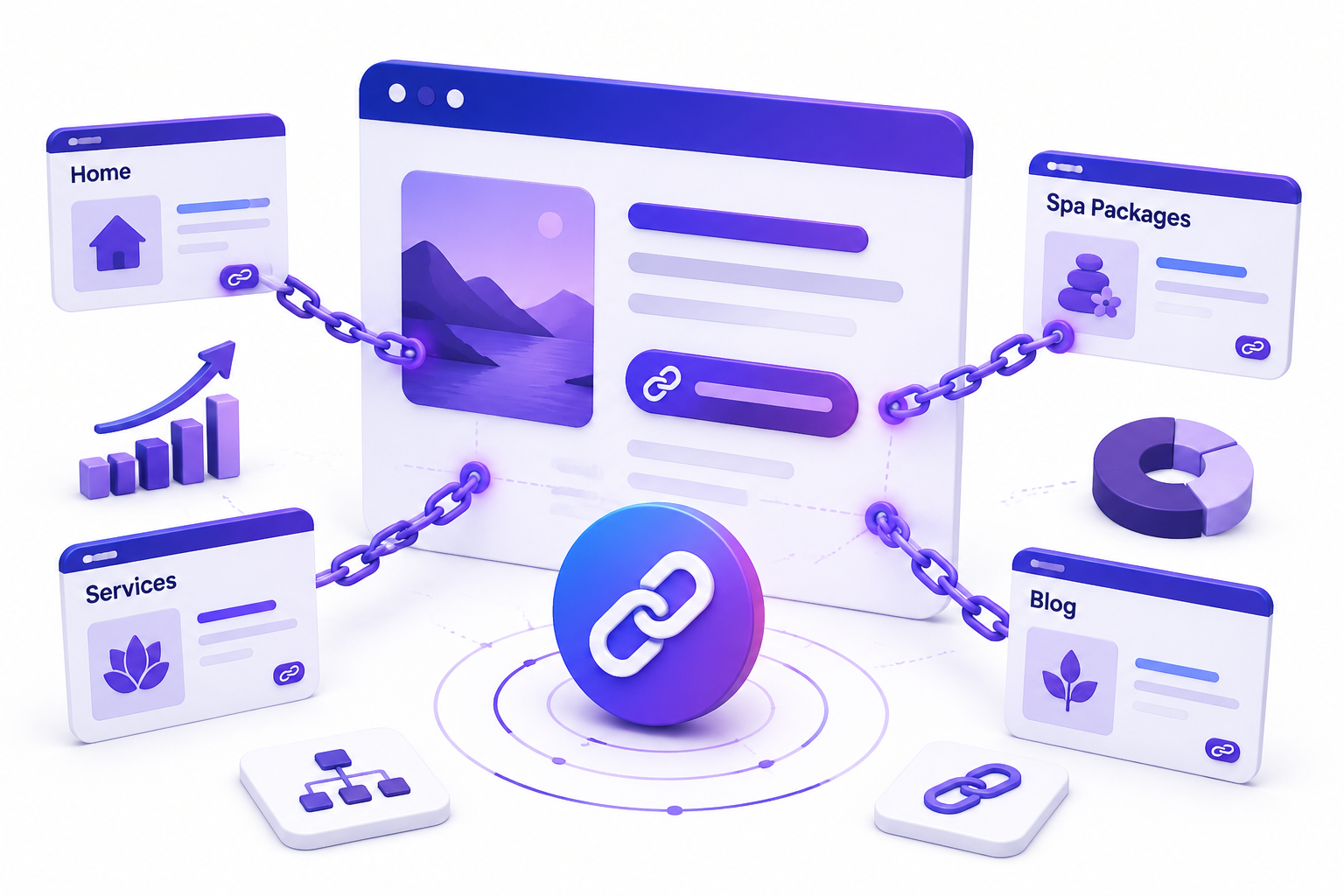
Internal linking plays an important role in helping spa websites improve visibility, guide visitors, and create a better browsing experience. Many spa businesses focus on beautiful designs, services, and booking systems but overlook how links between pages can influence search performance.
A well-planned internal linking structure helps search engines understand the relationship between your website pages. It also helps visitors find relevant treatments, service details, blog content, and booking pages without confusion.
For local spa businesses competing in crowded markets, strategic internal links can support stronger rankings for service-based searches. When implemented correctly, internal linking connects your content naturally and helps users move through their customer journey.
Build a Clear Website Structure for Better Navigation
A strong website structure is the foundation of effective internal linking for any spa business. Before adding links randomly, organize your pages based on services, locations, educational content, and customer needs.
Spa websites usually contain multiple treatment pages such as massage therapy, facials, skincare, body treatments, and wellness packages. Creating clear connections between these pages allows visitors to move easily from general information to specific services.
Search engines also use website structure to understand which pages are most valuable. A logical hierarchy helps distribute page authority and improves the chances of important service pages receiving more visibility.
Your homepage should connect to major service categories, while service pages should link to related treatments and helpful resources. This creates a smooth path for both visitors and search engines.
A simple spa website structure may look like this:
- Homepage → Main spa services
- Service pages → Related treatments
- Blog posts → Relevant service pages
- Location pages → Local service information
- Service pages → Booking or contact pages
Connect Spa Services With Relevant Internal Links
Service pages are the most valuable pages on a spa website because they directly influence bookings. Internal links should help visitors discover related treatments while encouraging them to spend more time exploring your services.
For example, a massage therapy page can naturally link to pages about stress relief treatments, aromatherapy sessions, or wellness packages. These connections provide additional value instead of forcing visitors to search through the website.
Using descriptive anchor text is important when creating internal links. Instead of using generic phrases like “click here,” use relevant terms that describe the destination page.
For example, linking the phrase “deep tissue massage treatment” to a specific service page gives users and search engines clearer information about the linked content.
Good anchor text examples include:
- Relaxing facial treatments
- Hot stone massage services
- Spa packages for couples
- Professional skincare treatments
- Wellness and relaxation programs
Create Content Connections Through Spa Blogging
Blog content gives spa businesses many opportunities to build useful internal links. Educational articles can attract visitors who are researching skincare, wellness, relaxation methods, and treatment options.
A blog post about reducing stress naturally can link to massage therapy services. An article about skincare routines can connect readers with facial treatment pages. These links create a relationship between informational content and business services.
Internal linking from blogs also helps older service pages receive more attention. As you publish new articles, connecting them with existing pages creates a stronger website network over time.
For example, a spa blog can include links to:
- Massage service pages
- Facial treatment pages
- Membership programs
- Appointment booking pages
- Spa location pages
Use Location-Based Internal Links for Local SEO Growth
Local SEO is important for spas because customers usually search for nearby wellness services. Internal links between location pages and service pages can strengthen local relevance.
If your spa has multiple locations, each location page should connect with relevant treatments available in that area. This helps visitors quickly find services while supporting location-based search visibility.
For example, a page targeting “spa services in Miami” can link to massage, facial, and body treatment pages available at that location. This creates a stronger connection between location information and service offerings.
Location-based internal linking can support:
- Better user navigation
- Stronger local relevance
- Improved service discovery
- Higher booking opportunities
Avoid Common Internal Linking Mistakes on Spa Websites
Many spa websites add internal links without a clear strategy. Too many unrelated links can confuse visitors and reduce the effectiveness of your website structure.
Every internal link should have a purpose. It should guide users toward helpful information, related services, or important conversion pages.
One common mistake is linking only to the homepage. While homepage links are useful, important service pages also need internal support from blogs, category pages, and related treatments.
Another mistake is using the same anchor text repeatedly. Search engines prefer natural linking patterns where different pages connect through relevant and varied descriptions.
Common internal linking mistakes include:
- Adding too many links in one paragraph
- Using unclear anchor text
- Ignoring older website pages
- Linking unrelated topics
- Creating broken internal links
Improve User Experience With Strategic Link Placement
Internal links should appear where they provide the most value to visitors. Placing links naturally within content helps users find additional information without interrupting their reading experience.
For spa websites, the best locations often include service descriptions, blog articles, treatment comparisons, and frequently asked questions.
A visitor reading about facial treatments may become interested in skincare consultations. A natural link inside the content can guide them directly to that service page.
Strategic placement improves engagement because visitors can easily continue their journey instead of leaving the website to search elsewhere.
Effective link placement areas include:
- Introduction sections
- Service descriptions
- Blog recommendations
- Related treatment sections
- Customer education pages
Link High-Value Pages From Strong Website Areas
Not every page on your website has equal importance. Some pages generate more bookings, revenue, or customer interest than others.
High-value pages usually include popular services, booking pages, membership offers, and location pages. These pages should receive internal links from multiple relevant areas of your website.
For example, if massage therapy is your most profitable service, create links from blogs about relaxation, stress management, and wellness topics.
This approach helps distribute website authority while making important pages easier for visitors to find.
A balanced linking strategy can include:
- Homepage links to main services
- Blog links to treatment pages
- Service links to booking pages
- Location links to available treatments
Optimize Internal Links Around Customer Search Intent
Understanding what customers want when they visit your website helps create better internal linking opportunities. Different visitors may be searching for information, comparing treatments, or ready to schedule appointments.
A person searching for “benefits of facial treatments” may not be ready to book immediately. A helpful blog link can guide them toward facial service information when they are ready.
Someone searching for “best spa near me” may need quick access to location details and booking options. Internal links should support these different stages.
Matching links with customer intent creates a smoother experience and increases the chance of conversions.
Maintain and Update Internal Links Regularly
Internal linking is not a one-time task. As your spa website grows, new services, blog posts, and location pages should be connected with existing content.
Regular website audits help identify broken links, outdated pages, and missed linking opportunities. Keeping your internal link structure updated supports long-term SEO performance.
When adding new content, review older pages and look for places where a new internal link can provide value.
A regular maintenance process can include:
- Checking broken internal links
- Updating outdated service references
- Adding links to new blog posts
- Reviewing important page connections
- Removing unnecessary links
Use Internal Linking to Support Spa SEO Strategy
Internal linking works best when combined with other SEO practices. A strong website needs quality content, optimized pages, technical improvements, and a user-focused structure.
For spa businesses, internal links can support rankings for service keywords, improve website engagement, and help customers find relevant treatments faster.
A complete SEO strategy may also include improving local visibility through a proper local SEO strategy for spas, optimizing service pages, and creating valuable wellness content.
Internal linking connects these different SEO efforts together. It creates a stronger website experience where every page supports another.
Measure Internal Linking Performance With Analytics
Tracking internal linking performance helps you understand how visitors interact with your website. Analytics tools can show which pages receive clicks, where users continue browsing, and which content supports conversions.
Reviewing this data allows you to improve your linking strategy based on actual visitor behavior.
For example, if many users visit a skincare blog but rarely reach your facial service page, adding stronger internal links may improve the customer journey.
Important metrics to monitor include:
- Page visits
- User navigation paths
- Time spent on pages
- Booking conversions
- Internal link clicks
Create a Natural Internal Linking Plan for Long-Term Results
A successful internal linking strategy should feel natural to users. Links should appear because they provide additional helpful information, not because they are added only for search engines.
Spa websites benefit from creating connections between educational content, services, locations, and booking opportunities.
Start by reviewing your current website structure and identifying important pages that need more support. Then gradually add relevant links across your website.
A simple internal linking plan can include:
- Review existing website pages.
- Identify important service pages.
- Connect blogs with related treatments.
- Improve anchor text quality.
- Check links regularly.
Conclusion
Internal linking can improve how spa websites organize content, guide visitors, and support SEO performance. A thoughtful linking structure connects services, blogs, locations, and booking pages while creating a smoother experience for potential customers.
By using relevant anchor text, connecting related treatments, updating old content, and monitoring performance, spa businesses can build a stronger online presence. Learning how to optimize internal linking for spas helps create a website that is easier to navigate and more valuable for both visitors and search engines.
Frequently Asked Questions
What is internal linking for a spa website?
Internal linking connects one page of a spa website to another page on the same domain. These links help visitors find related treatments while helping search engines understand website structure and page relationships.
How many internal links should a spa page have?
There is no fixed number of internal links required. A spa page should include links that are useful and relevant. The goal is to support navigation without creating unnecessary distractions for visitors.
Can internal links improve local SEO for spas?
Yes, internal links can support local SEO by connecting location pages, service pages, and local content. They help search engines understand your spa services and locations more clearly.
What anchor text should spas use for internal links?
Spas should use descriptive anchor text related to the linked page. Phrases like “massage therapy services” or “custom facial treatments” provide clearer information than generic terms.
How often should spa websites update internal links?
Spa websites should review internal links regularly, especially after adding new services, changing pages, or publishing new blog content. Regular updates help maintain a healthy website structure.
0 Comments