
Digital advertising allows businesses to reach customers, promote products, and generate sales through different online channels. However, spending money on ads without measuring results can make it difficult to understand whether campaigns are actually profitable.
One of the most important metrics marketers use to evaluate advertising performance is ROAS. This measurement helps businesses understand how much revenue they generate compared to the amount spent on advertising.
For companies running campaigns on platforms like Google Ads, Facebook Ads, Instagram Ads, and other paid channels, tracking ROAS provides valuable insights into campaign efficiency and budget decisions.
Knowing what does roas stand for in marketing helps advertisers measure the financial impact of their campaigns and make better decisions about future investments.
Meaning of ROAS in Digital Marketing
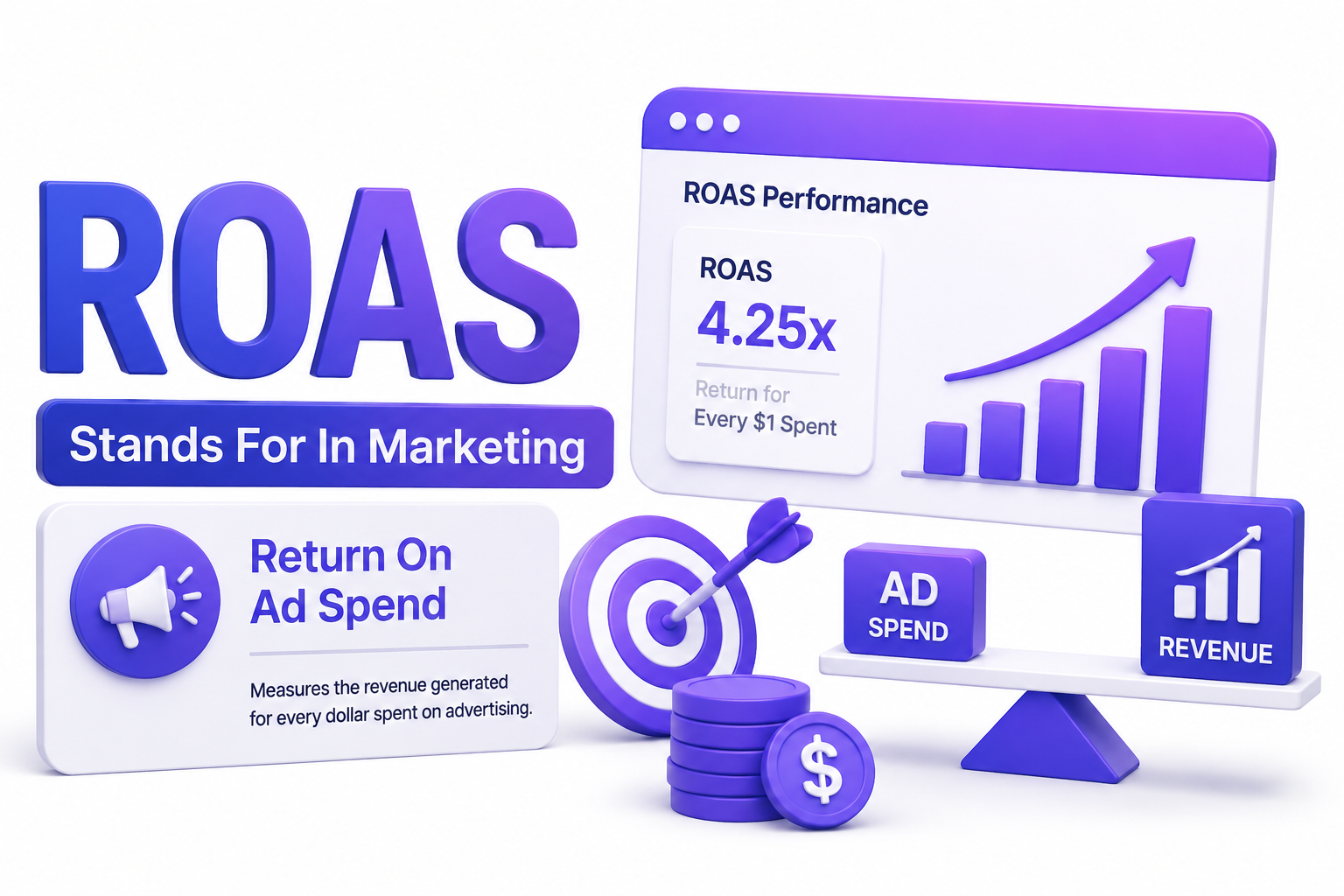
ROAS stands for Return on Ad Spend. It measures the amount of revenue a business earns for every dollar spent on advertising. This metric shows whether an advertising campaign is generating enough income compared to its cost.
The formula is simple:
ROAS = Revenue Generated From Ads ÷ Advertising Cost
For example, if a company spends $1,000 on Facebook ads and generates $5,000 in sales, the ROAS would be 5. This means the business earned $5 for every $1 spent on advertising.
ROAS helps marketers understand which campaigns, platforms, and strategies provide the strongest financial results.
Businesses use ROAS to evaluate:
- Campaign profitability
- Advertising efficiency
- Budget allocation
- Marketing performance
- Customer acquisition strategies
Why ROAS Matters for Business Growth
Advertising costs can quickly increase when campaigns are not properly monitored. Without measuring results, businesses may continue investing in advertisements that generate little or no return.
ROAS provides a clear view of how effectively advertising budgets are being used. It allows marketers to identify successful campaigns and reduce spending on strategies that do not perform well.
A strong ROAS does not only mean more revenue. It also shows that a business is reaching the right audience with effective messaging.
ROAS helps businesses:
- Make smarter budget decisions
- Compare marketing channels
- Improve campaign performance
- Identify profitable strategies
How to Calculate ROAS Correctly
Calculating ROAS requires two important numbers: total revenue generated from advertising and total advertising expenses. Once these values are available, the calculation becomes straightforward.
For example, if an online store spends $2,000 on Google Ads and receives $8,000 in sales, the calculation would be:
$8,000 ÷ $2,000 = 4 ROAS
This means the company generated four times the amount spent on advertising.
However, advertisers should remember that ROAS only measures advertising revenue. It does not automatically include other business expenses such as:
- Product costs
- Employee salaries
- Shipping expenses
- Software costs
- Operational expenses
Difference Between ROAS and ROI
ROAS and ROI are often confused because both measure financial performance. However, they focus on different areas of business measurement.
ROAS specifically evaluates advertising performance by comparing ad spending with revenue generated from advertisements.
ROI, or Return on Investment, considers the overall profitability of an investment after including additional costs.
For example:
- ROAS measures revenue from advertising campaigns.
- ROI measures overall business profit after expenses.
Both metrics are useful, but they answer different questions about business performance.
ROAS Benchmarks for Different Marketing Campaigns
There is no universal ROAS number that works for every business. A profitable ROAS depends on industry, profit margins, customer value, and advertising goals.
Some businesses may consider a 3x ROAS successful, while others may need 5x or higher to remain profitable.
For example, a company selling high-margin digital products may accept a lower ROAS compared to a retailer with smaller profit margins.
Factors affecting ideal ROAS include:
- Product pricing
- Profit margins
- Customer lifetime value
- Industry competition
- Marketing objectives
Factors That Influence ROAS Performance
Many elements affect whether an advertising campaign achieves a strong or weak ROAS. Improving only one area may not be enough because advertising success depends on multiple connected factors.
Audience targeting is one of the biggest influences. Showing ads to people who are more likely to purchase can improve conversion rates and increase revenue.
Other important factors include:
- Ad quality
- Landing page experience
- Product offer
- Pricing strategy
- Customer journey
A complete marketing approach helps improve overall ROAS performance.
Improve Audience Targeting for Better ROAS
Targeting the right audience is essential for generating profitable advertising results. Even a creative and well-designed advertisement may fail if it reaches people who have little interest in the product.
Platforms like Facebook, Instagram, and Google provide detailed targeting options that allow businesses to reach specific customer groups.
Effective targeting focuses on customer needs, behaviors, interests, and previous interactions with the brand.
Businesses can improve targeting by:
- Creating customer personas
- Using remarketing campaigns
- Building lookalike audiences
- Analyzing customer data
- Testing different audience segments
Create Better Ad Creatives to Increase Results
Ad creatives influence how users respond to advertisements. Strong visuals, clear messages, and relevant offers can encourage more people to click, engage, and purchase.
Poor-performing advertisements often waste budget because they fail to capture attention or communicate value.
Testing different creative approaches helps identify what connects best with your audience.
Effective ad improvements include:
- Writing clearer headlines
- Using engaging visuals
- Highlighting customer benefits
- Testing different formats
- Improving calls to action
Optimize Landing Pages for Higher Conversions
Getting clicks is only one part of successful advertising. The landing page experience determines whether visitors become customers after interacting with an advertisement.
A slow, confusing, or unrelated landing page can reduce conversion rates and negatively affect ROAS.
The landing page should match the advertisement message and guide visitors toward a clear action.
Important landing page improvements include:
- Faster loading speed
- Mobile-friendly design
- Clear product information
- Simple navigation
- Strong purchase buttons
Use Data Analysis to Improve Advertising Decisions
Successful advertisers regularly review campaign data to identify opportunities for improvement. ROAS reports help businesses understand which campaigns generate the highest returns.
Instead of making decisions based only on impressions or clicks, marketers can focus on actual revenue outcomes.
Analyzing campaign data helps answer important questions about advertising performance.
Review:
- Which ads generate sales
- Which audiences convert better
- Which platforms perform best
- Which products create more revenue
ROAS Tracking Across Different Advertising Platforms
Businesses often run advertisements across multiple platforms. Each platform may produce different ROAS results depending on audience behavior and campaign strategy.
For example, Google Ads may perform well for users actively searching for products, while social media ads may help create awareness and generate future customers.
Tracking ROAS separately for each platform helps businesses understand where their budget works best.
Common advertising channels include:
- Google Ads
- Facebook Ads
- Instagram Ads
- LinkedIn Ads
- TikTok Ads
Common Mistakes That Reduce ROAS
Many businesses struggle with low ROAS because of poor planning, weak targeting, or incorrect measurement. Identifying these mistakes helps advertisers improve campaign profitability.
One common issue is focusing only on traffic instead of revenue. Thousands of clicks do not matter if they do not generate sales.
Other mistakes include:
- Targeting the wrong audience
- Ignoring customer data
- Using poor-quality creatives
- Not testing campaigns
- Failing to optimize landing pages
Balance ROAS With Long-Term Marketing Goals
Although ROAS is an important advertising metric, businesses should not rely on it alone. Some campaigns may have lower immediate returns but help build brand awareness and customer relationships.
For example, a new brand may invest in awareness campaigns before achieving strong sales results.
A complete marketing strategy considers both short-term revenue and long-term growth.
Businesses should also consider:
- Customer retention
- Brand recognition
- Customer lifetime value
- Market expansion
Use ROAS Insights to Manage Advertising Budgets
ROAS data helps businesses decide where to increase or decrease advertising investment. Campaigns producing strong returns may receive additional budget, while weaker campaigns can be improved or paused.
Budget decisions based on performance data reduce unnecessary spending and improve marketing efficiency.
A smart budget strategy includes:
- Increasing successful campaigns
- Testing new opportunities
- Reducing wasteful spending
- Reviewing performance regularly
Create a Continuous ROAS Improvement Process
Improving ROAS is not a one-time activity. Advertising platforms, customer behavior, and competition constantly change, so campaigns require regular adjustments.
Successful businesses continuously test new ideas, analyze results, and improve their strategies.
A continuous improvement process includes:
- Reviewing campaign reports
- Testing advertisements
- Updating audiences
- Improving website experience
- Measuring customer behavior
Conclusion
ROAS is one of the most useful metrics for measuring advertising effectiveness because it shows how much revenue a business generates from its ad investment. By tracking campaign performance, improving targeting, optimizing landing pages, and analyzing customer behavior, businesses can make better marketing decisions.
Knowing what does roas stand for in marketing helps advertisers understand whether their campaigns are producing valuable results and where improvements are needed for stronger growth.
FAQ’S
What does ROAS mean in advertising?
ROAS means Return on Ad Spend. It measures how much revenue a business earns compared to the amount spent on advertising. Marketers use this metric to evaluate campaign profitability and advertising efficiency.
What is a good ROAS for marketing campaigns?
A good ROAS depends on industry, profit margins, and business goals. Many businesses consider a 3x to 5x ROAS positive, but the ideal target varies based on operational costs and customer value.
How is ROAS calculated?
ROAS is calculated by dividing the revenue generated from advertisements by the total advertising cost. For example, $5,000 revenue from a $1,000 ad spend equals a 5x ROAS.
Is higher ROAS always better?
A higher ROAS generally indicates better advertising efficiency, but businesses should also consider growth goals, customer acquisition costs, and long-term value. Some campaigns with lower ROAS may support future business growth.
How can businesses improve ROAS?
Businesses can improve ROAS by targeting better audiences, creating stronger advertisements, improving landing pages, testing campaigns, and analyzing performance data regularly to make smarter marketing decisions.
0 Comments